

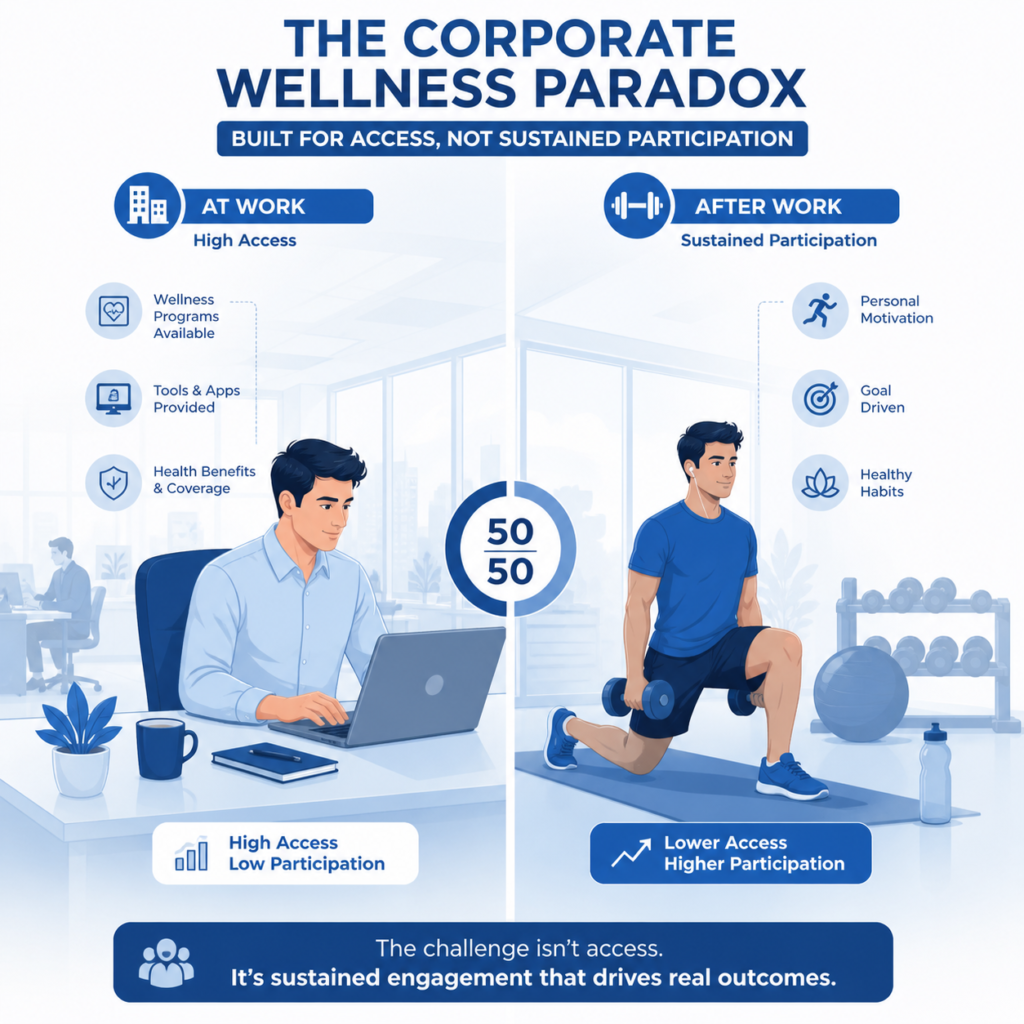
Imagine the scenario, you are the CEO of a corporate firm in India. You have just been ranked among the best places to work, and one of the key factors in that ranking was your wellness program. You feel pretty satisfied with the workplace you have created, which prioritises employee health and wellness above all. You give yourself the metaphoric pat on the back, and why not after all, this is a phenomenal achievement on paper. Data supports your efforts. According to a Fitpass report, 57% of companies increased their wellness initiatives post-COVID. So your results are in line with the investment, correct? That’s a corporate wellness paradox.
But the same reports say that 77% of employees are dissatisfied with corporate wellness programs. And to add to it, 43% feel that their wellness programs are inadequate. So while corporate firms have increased budgets for wellness, the feeling on the ground is very different. One of the biggest lessons I have learned in my corporate career is that most leaders have lost touch with the ground realities within their own organisations. What awards like the fictional CEO in my scenario hide is that wellness programs in India are not working. This is clearly evident from the data that we have in the country, where most metabolic diseases are on the rise. I regularly serve as an assessor for healthcare in the Arogya World Healthy Workplace Program, and these findings and the entire discussion will definitely make me a better assessor for the future.
India is number 1 in the world for the number of citizens with diabetes. We are more sedentary than most nations and overall have a higher rate of obesity per capita. While the corporate world is a microcosm of this data, it indicates where we are heading. So much so that the national government has been concerned about the falling fitness levels in the country and launched the Fit India campaign. Political leaders have a good sense of the pulse of the country, but unfortunately, most corporate leaders have invested in programs that don’t seem to be delivering results, either on actual parameters or on the perception among the employees for whom they were built. Here lies the corporate wellness paradox. This investment is going down the drain.
I had an interesting discussion with Akshay Verma of Fitpass, where we also looked at retention parameters. According to him and his published report, simply enrolling in a Fitpass program leads to a 14% reduction in attrition. That is just a phenomenal number: enrollment in a well-designed program that gives you access, convenience, and, in a new plan, money back without even working out for a single session leads to a 14% upside. For those who worked out two times a month, the number shoots up to around 40%. This is money in the bank for most corporations, as we all know, it takes almost 3X as much to replace an existing employee. Any human capital report will tell you that cost avoidance in matters of employee retention leads to better EBITDA. So why is this lost on corporate leaders?
Individuals are to blame as well; while corporate programs are designed for access, they are not built to encourage participation. Most individuals have to make many decisions about their fitness. Should they go to the gym or join a sport? Should they find a place close to the office or close to home? If they have to change workouts, then they have to find a new place and pay for a membership. So, in essence, our infrastructure today is not flexible enough to encourage participation. Corporate wellness programs are similar, very rigid, and low in participation.
Finally, I think the other opportunity is to have younger employees design corporate wellness programs. Today, the workforce is young; India has the youngest workforce in the world, but the programs are designed by leaders in their 50s. There is an opportunity to design these programs so that the bulk of the organisation participates.
But let me know your thoughts on the corporate wellness programs in your office. Are they adequate, or do they leave a lot to be desired?